Published: 12 Nov 2025 | Updated: 16 Dec 2025


Can you really apply a unique strategy to American roulette — or does its double zero simply make the game harder to beat?
At first glance, the second green pocket might look like a minor layout tweak, but mathematically, it changes how odds, pacing, and variance behave across every betting system.
This article explores whether those changes justify distinct strategic adaptations — not systems that defy probability, but structured methods that help players manage rhythm, variance, and expectation specifically within the American format.
In this article, you’ll learn:
- What the double zero means for odds and betting outcomes
- How popular roulette systems behave differently under American rules
- Which realistic strategies help manage variance and pacing
- Why bankroll structure and discipline matter more than prediction
- How responsible tools and platform design support consistent play
Whether you’re playing via online roulette, at a live roulette table, or inside a physical casino, understanding this structural nuance is the first step to mastering the rhythm of the American wheel.
|
Disclaimer: This article is for educational and informational purposes only. Roulette outcomes are random and independent. Always play responsibly and within your limits. For support, visit BeGambleAware.org. 18+ |
Understanding the Double Zero: What It Means for Strategy
At its core, roulette remains a game of probability governed by fixed ratios. The American layout’s 38 pockets dilute winning odds across all bets:
- Straight-up bets (single numbers) pay 35:1 but have a 1/38 chance instead of 1/37.
- Even-money bets (red/black, odd/even) succeed on 18 of 38 spins — a 47.37% success rate compared with 48.65% in European format.
The takeaway: every wager in American roulette carries a slightly higher long-term cost. That doesn’t make the game less enjoyable — it simply means players must manage shorter variance cycles and smaller recovery margins.
In table games like roulette, blackjack, or baccarat, small differences in rule design lead to major shifts in probability. Here, the double zero acts as an additional “house buffer,” raising the house edge to 5.26% and creating faster gameplay variance — particularly noticeable at live casino tables.

How Betting Systems Behave Differently in American vs European Roulette
The extra zero doesn’t just change the payout ratio — it changes how betting systems function. While both games share the same mechanics, probability pressure in American roulette compounds faster.
|
System Type |
European Roulette (Single Zero) |
American Roulette (Double Zero) |
Performance Summary |
|
Martingale |
Fewer losses due to lower edge |
Losing runs escalate faster |
Only viable for low stakes, short sessions |
|
Fibonacci |
Moderate recovery curve |
More spins needed to recover |
Best for pacing, not profit |
|
D’Alembert |
Smooth variance |
Slower recovery in longer runs |
Still a useful structure tool |
|
Flat Betting |
Stable and predictable |
Slightly faster net decline |
Safest long-term pacing approach |
Dr. Stephen Ethier, in The Doctrine of Chances (Springer, 2010), explains:
“The second zero doesn’t add complexity — it adds disadvantage.”
Probability expert Michael Shackleford (Wizard of Odds, 2023) similarly advises treating American roulette as “a pacing exercise, not a predictive challenge.”
And gambling researcher Dr. Mark Griffiths from Nottingham Trent University highlights that:
“The most resilient players are those who understand structure — not prediction.”
Together, these views reinforce that American roulette’s uniqueness lies not in prediction mechanics but in the need for more adaptive pacing and disciplined structure.
Realistic Approaches: Managing a Higher House Edge
In mathematical terms, American roulette’s 5.26% house edge produces roughly twice the long-term bankroll decline of its European counterpart.
Therefore, any viable “unique” strategy must account for faster loss rates and shorter variance windows. Three evidence-based adjustments stand out:
1. Time-Bounded Sessions:
Limit each play cycle to 50–70 spins; statistical variance compounds faster in American layouts.
2. Tiered Bankroll Structuring:
Divide funds into three pacing tiers (entry, recovery, withdrawal) to adapt dynamically to loss cycles.
3. Reverse Progressions:
Lightly increase bet size after wins, not losses — mitigating compounding exposure while maintaining rhythm.
Shackleford (2023) confirms:
“Every spin remains independent; recovery is a matter of time and bankroll, not pattern.”
Thus, American roulette’s “unique strategy” lies not in exploiting odds, but in playing responsibly and managing time-weighted exposure.
Adaptive Play in Modern Settings
Roulette is now enjoyed across mobile apps, live dealer studios, and RNG-based tables — all using certified fairness testing. On-the-go players can explore the casino mobile app for double-zero formats with built-in responsible play tools.
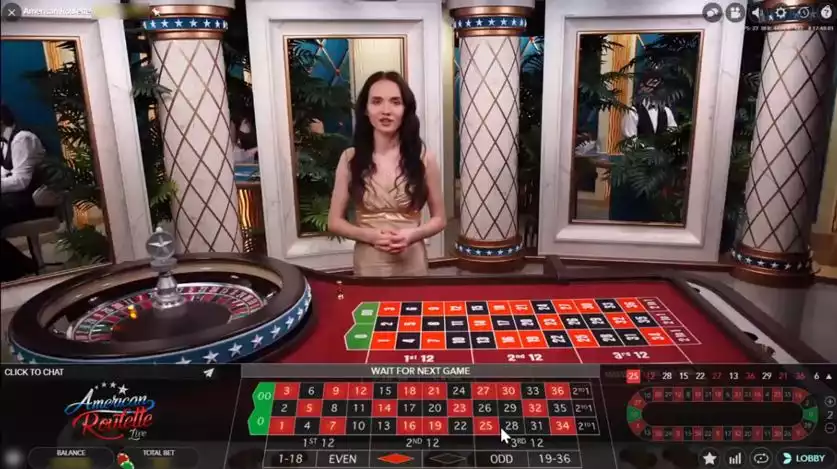
Meanwhile, live casino tables replicate authentic pacing and croupier timing, offering a more deliberate tempo for those who prefer structure over speed.
Promotions and Bonus Play
Roulette promotions remain secondary to slot offers, but can still aid pacing strategies when used with discipline. Always verify:
- Contribution percentage toward wagering requirements
- Minimum spin counts and eligible table types
- Whether bonus bets apply to both zeros or are restricted
Smart players treat bonuses as session extenders, not profit engines — aligning with the pacing philosophy central to American play.
Conclusion
There is no system that overcomes the double zero — but there are strategic behaviors unique to American roulette’s higher volatility:
✅ The double zero increases the house edge to 5.26%, demanding structural discipline
✅ Pacing and bankroll tiering offset volatility better than progressive recovery systems
✅ Time-bounded sessions and adaptive play tools are mathematically beneficial
✅ Flat and reverse-progressive methods preserve longevity and engagement
In essence, American roulette strategy is not about discovering a hidden formula — it’s about redefining structure and rhythm to survive faster mathematical erosion.
That’s what makes it unique.
Key takeaways:
- Unique strategies for American roulette exist as adaptive frameworks, not predictive models.
- The double zero amplifies variance, making pacing and bankroll structure essential.
- Data-driven adjustments (time limits, tiered funds, reverse progressions) offer measurable improvement.
- Responsible gaming tools enhance discipline and mitigate volatility exposure.
For a deeper understanding of fair gameplay and strategy pacing, explore related learning resources at Prime Casino — your UK-licensed home for regulated roulette play.