Published: 8 Jan 2026 | Updated: 23 Feb 2026


Yes. UK-licensed online casinos can and do detect bot usage. Under UK Gambling Commission rules, all gameplay must be conducted by humans, both in digital games and live casino environments.
Operators use a combination of behavioural analysis, technical monitoring, and software controls to identify automated play and prohibited third-party tools. These systems are designed to protect fair play, consumer safety, and regulatory compliance.
This guide explains:
- How online casinos detect bot-driven behaviour
- Which behavioural and technical signals raise red flags
- Why UK rules prohibit automation and AI-assisted play
- What typically happens if bot usage is identified
|
Disclaimer: UK-licensed casino games and online slots operate on randomised systems. Automated tools, scripts, or AI software cannot predict, influence, or alter gambling outcomes. Gambling is for adults aged 18+ and should always be approached responsibly. |
How Online Casinos Detect Bot Usage
Modern online casinos use layered detection systems that monitor player activity in real time. These systems don’t rely on a single trigger. Instead, they analyse large volumes of gameplay data to identify patterns that don’t align with normal human behaviour.
Under UKGC Remote Technical Standards, operators are required to prevent the use of unauthorised third-party software that interferes with game operation or player interaction.
Typical detection methods include:
- Session timing and duration analysis
- Input rhythm and interaction checks
- Automated pattern recognition
- Server-side validation of gameplay actions
Rather than detecting “bots” directly, casinos identify automation indicators that suggest gameplay is not being driven by a human. Detection systems apply equally across desktop and mobile play, ensuring that promotions and offers are not exploited through automated tools.

Behavioural Patterns That Signal Automation
One of the clearest signs of bot usage is non-human consistency. Human players naturally vary their behaviour due to hesitation, distraction, emotion, or error. Bots do not.
Common behavioural red flags include:
- Perfectly timed actions repeated over long sessions
- Identical betting intervals across hundreds or thousands of rounds
- No pauses, delays, or erratic decision changes
- Continuous play far beyond normal human endurance
These patterns are especially visible in games such as slots, roulette, or fast-paced digital table games, where bots can operate without fatigue.
When such behaviour is detected, accounts are often flagged for manual review, even if no immediate enforcement action is taken.
Technical Monitoring and Software Controls
Beyond behavioural analysis, casinos deploy technical safeguards to detect unauthorised software interaction at a system level.
These controls may monitor:
- Unusual API call frequency or structure
- Abnormal input sources or execution paths
- Scripted interaction sequences
- Software overlays, automation frameworks, or memory access attempts
RTS 16 explicitly restricts software that automates decision-making or alters game flow, regardless of whether it claims to be informational or assistive.
From a regulatory standpoint, responsibility lies with the player, not the tool provider. Claiming ignorance of how a script or program functions does not remove liability.
The Role of AI and Automated Decision Systems
Bot usage is increasingly linked to AI-driven automation, where systems analyse gameplay data and act on it without ongoing human input.
The UK Information Commissioner’s Office (ICO) defines AI decision systems as technologies that evaluate data, generate outputs, and take actions with limited or no human intervention.
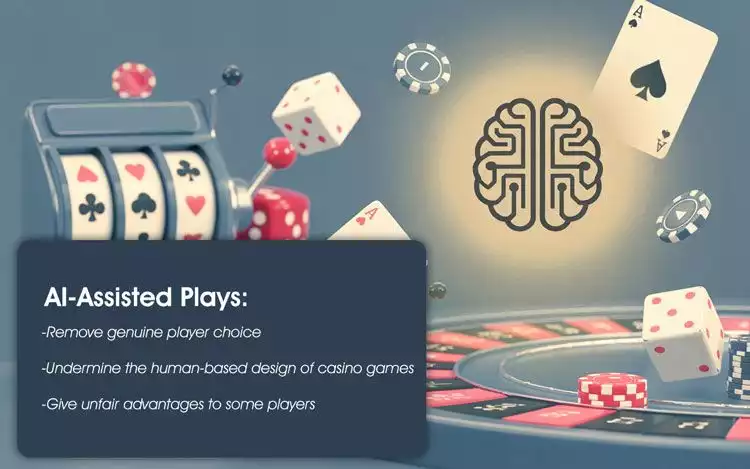
When applied to online gambling, these systems:
- Remove genuine player choice
- Undermine the human-based design of casino games
- Interfere with fair player conditions
For this reason, UK casinos treat AI-assisted play and bots as functionally equivalent, even if the tool is marketed as an “assistant” rather than an autonomous program.
What Happens If a Casino Detects a Bot?
If suspicious activity is identified, casinos usually follow a staged enforcement process rather than immediate closure.
This process may include:
- Temporary account suspension
- Manual review of gameplay data and logs
- Requests for explanation or identity verification
- Confiscation of winnings generated during automated play
- Permanent account closure in serious or repeated cases
These actions align with UKGC expectations around fairness, integrity, and consumer protection, as reinforced in regulatory commentary and enforcement priorities.
Importantly, casinos do not need to prove malicious intent. The use of prohibited software alone is sufficient to justify enforcement.
Why Casinos Take Bot Detection Seriously
Online gambling participation remains widespread in the UK, with millions of adults engaging across digital and land-based channels.
At this scale, maintaining trust requires operators to ensure:
- Equal conditions for all players
- Transparent and random outcomes
- Compliance with regulatory obligations
Bots distort game dynamics, undermine player confidence, and expose operators to serious regulatory risk. As automation tools evolve, detection systems are continuously updated to match them.
From a regulatory perspective, preventing automation is not optional—it’s a core requirement of holding a UK gambling licence.
Final Notes
Players are responsible for ensuring their gameplay complies with operator terms and UK regulations, regardless of how a tool is marketed.
- Yes, UK online casinos can and do detect bot usage
- Detection relies on behavioural, technical, and software-level analysis
- UKGC rules prohibit third-party automation outright
- AI-driven systems are treated the same as bots
- Consequences may include suspension, forfeiture, or permanent bans
18+ only. Gamble responsibly. If gambling stops being fun, seek support.