Published: 1 Nov 2025 | Updated: 3 Dec 2025


Have you ever wondered how a 17th-century invention evolved into one of the most iconic games found in every UK online and live casino today?
The story of European Roulette is one of precision, adaptation, and enduring appeal. Its design has changed little over the centuries, yet its journey from Parisian salons to online roulette tables is filled with fascinating twists of chance and ingenuity.
In this article, we’ll explore:
- How roulette began in France and spread across Europe
- The introduction of the single zero wheel that defined modern play
- How European Roulette became the UK’s trusted standard
- Its evolution into today’s live roulette experience
Curious players can explore the full online casino section for game options, from classic table games to immersive live casino rooms — all UKGC-licensed for safe, responsible play.
|
Disclaimer: This content is for educational and informational purposes only. It does not promote gambling or suggest outcomes. Results in all casino games, including roulette, are random. Players should only use UK-licensed platforms and play responsibly. 18+. For safer play advice, visit BeGambleAware.org. |
The French Origins of Roulette
The earliest form of roulette is widely attributed to French mathematician Blaise Pascal in the 1650s, during his experiments to create a perpetual motion machine. The result was a spinning device that later evolved into the roulette wheel we recognise today.
By the late 1700s, the game had become a fixture in Parisian gaming houses, with rules closely resembling those we still use.
The term roulette itself comes from the French word meaning “little wheel.” Early versions had both a single and double zero, similar to the later American variant. But it wasn’t until the 19th century that European Roulette took its distinctive single-zero form.

The Birth of the Single Zero Wheel
The turning point came in 1842, when brothers François and Louis Blanc introduced a new wheel design in Bad Homburg, Germany. Their version removed the double zero, reducing the house advantage and giving players better odds.
This single-zero model quickly became known as European Roulette, and its 37-number layout remains the benchmark today.
The Blanc brothers’ innovation marked the start of a new era in casino fairness — one that still underpins the modern responsible gaming environment. The 2.7% house edge that resulted from this layout would later set the European standard for fairness across UK and global casinos.
You can explore more about the mathematical impact of this design in Why the Single Zero Reduces the House Edge.
Monte Carlo and the Rise of European Prestige
By the mid-1800s, gambling in France faced strict legal restrictions, pushing many operators to seek new hubs. Monaco, under the direction of Prince Charles III, embraced the opportunity.
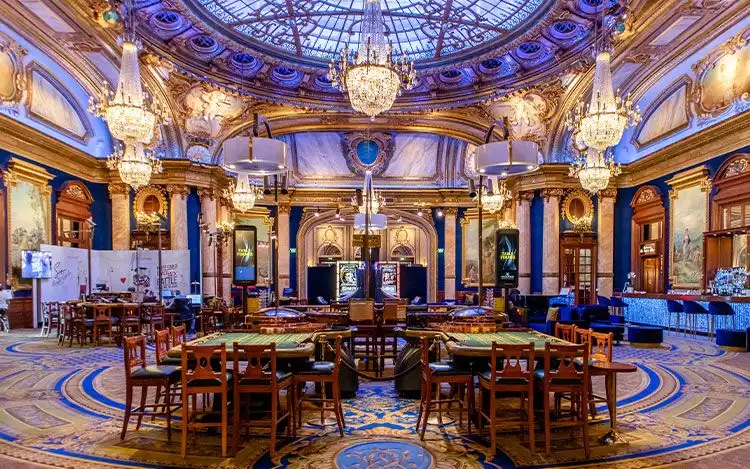
In 1863, the Blanc family opened the world-famous Monte Carlo Casino, establishing European Roulette as a symbol of luxury and sophistication.
The combination of elegance, transparent rules, and better odds compared to American tables made it an instant success.
Monte Carlo became synonymous with high-stakes gaming, inspiring countless imitators — and eventually, digital recreations in today’s mobile app versions of roulette.
To this day, the European single-zero wheel used in Monte Carlo remains the default in most UK casinos and live-dealer studios.
Expansion Across Europe and the Atlantic Divide
As roulette spread across Europe, the single-zero wheel became the continental norm, while American casinos adopted the older double-zero version. The difference may seem minor, but it had a major impact on player perception and house edge — nearly doubling it in the American format.
This clear advantage helped European Roulette dominate regulated markets such as the UK, where fairness and transparency are key licensing principles.
To better understand how these two designs differ, see Key Differences Between European and American Roulette.
Meanwhile, Key Differences Between European and French Roulette explores how traditional French rules like La Partage add further nuance to gameplay.
European Roulette in the UK – From Halls to Online Play
By the early 20th century, roulette had firmly taken root in Britain’s gaming halls.
When UK gambling laws modernised in the 1960s, the single-zero European wheel became the industry standard for all licensed venues.
This standardisation carried forward into the digital era, ensuring that RNG-based and live-dealer games followed the same structure and statistical fairness.
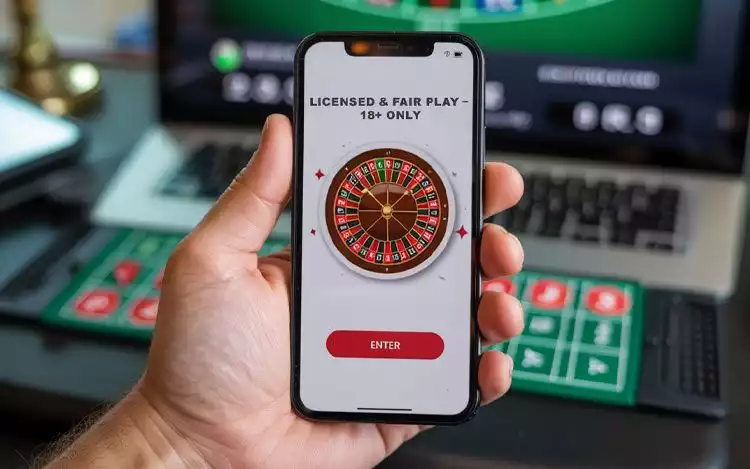
Today, UK players can enjoy the same elegant mechanics whether playing at a land-based table or through an HD live roulette stream.
Fairness remains central, supported by rigorous UKGC testing and certified software.
For comparisons between these formats, you can read Live European Roulette vs. RNG: Which Is Better?
Modern Technology and Fairness in European Roulette
The digital transformation of roulette didn’t just bring convenience — it enhanced transparency. Modern European Roulette games use certified RNGs (Random Number Generators) that replicate the physics of real spins.
Each spin is independently verified, and results cannot be influenced by players or operators.
For those who prefer the real-world ambience, live-dealer European Roulette offers authentic play streamed from professional studios. Both versions carry the same rules, odds, and house edge, providing players with consistent, fair results wherever they play.
To learn how game integrity is safeguarded, read How to Spot a Rigged European Roulette Game.
Players interested in responsible strategies can also explore Are There Strategies Unique to European Roulette? for guidance on structured yet realistic play approaches.
|
🎯 Fair Play Reminder European Roulette games use certified Random Number Generators (RNGs) or live dealer verification to ensure fairness and independence. All outcomes are random and cannot be influenced by player strategy or timing. 18+. For safer play advice, visit BeGambleAware.org. |
Why European Roulette Endures
European Roulette’s longevity comes down to three factors — simplicity, balance, and transparency.
Its 37-pocket design, clear betting layout, and lower house edge have kept it at the heart of both traditional and digital gaming.
While other variants offer slight twists, none combine elegance and fairness quite like the European original.
Whether enjoyed on a physical table or in an online casino, its core design remains unchanged for over 180 years — proof of how timeless good mechanics can be. European Roulette often comes paired with attractive welcome bonuses or targeted promotions — ideal for new players exploring the game’s legacy.
|
🎯 Important Reminder: Always read the full terms and conditions before claiming any bonus or promotion. Offers may include wagering requirements, time limits, or game restrictions. Playing informed helps you stay in control and enjoy a fair, responsible experience. |
Conclusion – The Legacy of the Little Wheel
From Blaise Pascal’s early experiments to modern live studios, European Roulette has maintained its reputation as the fairest and most refined version of the game. Its single zero symbolises the pursuit of balance — not an advantage, but a testament to enduring design.
Players who appreciate this mix of history and precision can explore Is European Roulette the Best Version to Play? for a data-based comparison or learn from The Impact of the House Edge in European Roulette to understand long-term play probabilities.
Key Takeaways
- European Roulette originated in 17th-century France and evolved into today’s fair single-zero format.
- The 1842 Blanc brothers’ wheel established the modern 2.7% house edge standard.
- Monte Carlo cemented its prestige, influencing casino culture across Europe and the UK.
- The game’s fairness and structure have endured into both RNG and live-dealer formats.
For more trusted insights and safe play environments, visit Prime Casino.