Published: 8 Dec 2025 | Updated: 28 Jan 2026


Have you ever wondered why the French roulette wheel carries a reputation for elegance, intellect, and destiny—beyond just being a casino game?
Unlike its European and American cousins, French Roulette is deeply rooted in philosophy, art, and French cultural history, making it both a mathematical curiosity and a visual metaphor for balance and chance.
In this feature, we explore how French Roulette has shaped cultural expression across centuries. You’ll learn about:
- Origins on the Riviera: From Parisian salons to Monte Carlo’s glamorous casino floors
- French Cinema: How filmmakers use the roulette wheel as a metaphor for fate, obsession, and moral tension
- Visual Symbolism: The wheel’s influence on Art Deco, fashion, and modern design
- Literature and Philosophy: From Pascal and Voltaire to Camus, the wheel as an intellectual device
- Theatre, Fashion, and Music: Underappreciated areas where roulette’s form inspires creativity
- Cultural Lens: Why French Roulette represents control within uncertainty
- Heritage Meets Regulation: How modern live roulette and online tables preserve tradition under UKGC standards
|
Disclaimer: This article focuses on cultural and historical perspectives, not gambling strategies or guaranteed outcomes. For context on responsible play, visit BeGambleAware.org. 18+ | Play Responsibly. |
Origins on the Riviera — From Parisian Salons to Global Symbol
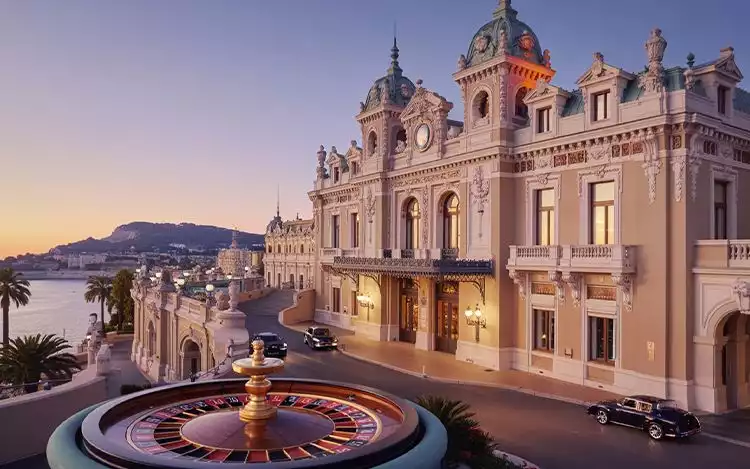
Roulette’s origins are unmistakably French. Early forms emerged in 18th-century Parisian salons, where mathematicians, aristocrats, and intellectuals treated games of chance as structured thought experiments rather than mere entertainment. These early tables laid the groundwork for what would later become the table française—defined by symmetry, restraint, and a single zero.
By the mid-19th century, roulette became inseparable from Monte Carlo’s rise as a European cultural centre. The Riviera casino transformed the wheel into a symbol of refinement, exporting French design sensibilities across Europe. What distinguished French Roulette from later variants was not spectacle, but discipline—an approach that still informs traditional table games today.
French Roulette in Cinema — Fate, Desire, and Destiny
French cinema treats roulette as narrative language rather than visual excess. The wheel appears not as a shortcut to fortune, but as a mirror for obsession, control, and inevitability.
Films such as La Baie des Anges (1963) present roulette as an emotional anchor, reflecting internal conflict rather than external reward. In Rififi (1955), the casino environment reinforces moral tension through restraint and silence. Even when roulette appears indirectly, its circular rhythm echoes the French cinematic preoccupation with destiny over resolution.
This contrasts sharply with Anglo-American portrayals, where roulette is often framed as spectacle within live casino settings. French storytelling instead positions the wheel as philosophical theatre.
Visual Symbolism — The Wheel as Design Language
The French roulette wheel’s geometry—alternating red and black, anchored by a single green zero—has long influenced European visual culture. Its balance and repetition align closely with Art Deco principles and early modernist explorations of symmetry and motion.
Designers and artists such as Sonia Delaunay and Fernand Léger explored circularity as rhythm rather than ornament. In contemporary culture, this visual logic persists in fashion, branding, and digital interfaces. Even modern live roulette layouts preserve the visual restraint established by their French predecessors, reinforcing continuity between heritage and technology.
Literature and Philosophy — From Pascal to Camus
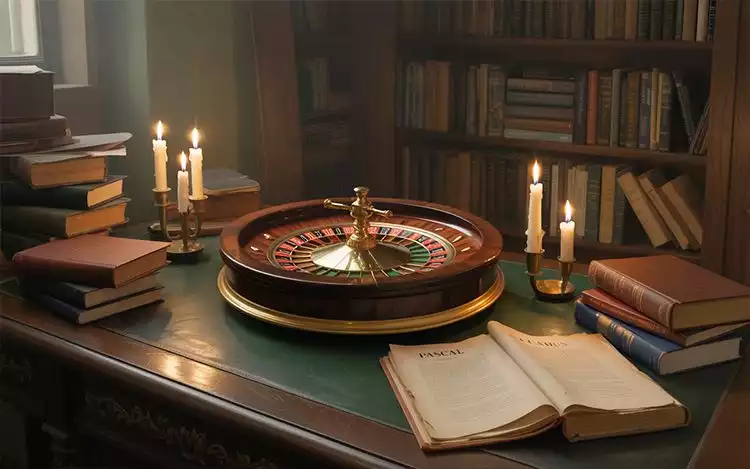
French Roulette is inseparable from France’s philosophical engagement with chance. Blaise Pascal’s work on probability—and his famous “Wager”—provided an intellectual framework for understanding risk as a rational choice within uncertainty. Enlightenment thinkers later expanded this idea, debating chance as a moral and social construct.
In the 20th century, Albert Camus reframed randomness as existential truth. His characters do not seek to overcome chance, but to accept it. The roulette wheel, impartial and repetitive, becomes a quiet metaphor for this worldview—one that resonates strongly with the disciplined structure of French Roulette compared to variants with higher complexity or spectacle.
Theatre, Fashion, and Music — The Undercited Arenas
Beyond film and literature, roulette’s influence quietly permeates other cultural domains.
In theatre, French playwrights used games of chance as devices to explore ritual and absurdity. In fashion, designers such as Yves Saint Laurent transformed casino motifs into haute couture narratives, treating risk as elegance rather than excess. In music, looping and cyclical structures—particularly in French electronic compositions—mirror the wheel’s mechanical rhythm.
These influences demonstrate how roulette’s form, rather than its function, shaped creative expression across disciplines.
Cultural Lens — Control Within Uncertainty
Culturally, French Roulette represents intellectual order imposed on randomness. Where other variants emphasise expansion or volatility, French Roulette communicates balance. This distinction explains its enduring appeal in design-led environments, including modern mobile casino platforms that prioritise clarity and structure over visual noise.
From a cultural perspective, the wheel does not promise mastery—it simulates it. The appeal lies in participation within defined limits, not in altering outcomes.
From Salons to Screens — Heritage Meets Regulation
Today, French Roulette exists within tightly regulated digital ecosystems. Modern platforms replicate traditional layouts using RNGs and live dealers, preserving the visual and procedural integrity of the original game.
Alongside standard table access, some licensed platforms may also reference optional bonuses or promotions within their broader casino offerings. These are presented separately from gameplay and do not affect roulette rules, probability, or cultural presentation. Availability, eligibility, and wagering conditions vary by platform and should always be reviewed independently.
Regulatory bodies ensure fairness, transparency, and consumer protection across all formats. Discussions around probability, including concepts like house edge or theoretical roulette strategies, are framed academically within regulated environments—not as guarantees or optimisation tools. Responsible participation remains central to contemporary roulette culture.
For player protection tools and guidance, visit Responsible Gaming.
Conclusion — The Wheel as a Cultural Constant
French Roulette endures not because of what it offers materially, but because of what it represents intellectually. From Enlightenment salons to modern digital tables, the wheel has remained a symbol of balance, restraint, and philosophical curiosity.
Key Takeaways
- Heritage: French Roulette emerged from Enlightenment thought and European refinement.
- Symbolism: The wheel functions as a metaphor for balance, fate, and rational uncertainty.
- Influence: Its visual and conceptual language spans cinema, fashion, theatre, and design.
- Perspective: French Roulette emphasises structure over spectacle.
- Continuity: Modern platforms preserve its form within regulated environments.
Explore more cultural and educational content at Prime Casino.
|
Disclaimer This article discusses roulette in historical and cultural contexts only. It does not promote gambling strategies or imply player influence over outcomes. 18+ | Play Responsibly |