Published: 3 Dec 2025 | Updated: 28 Jan 2026


Have you ever wondered whether a French Roulette table is genuinely fair — or whether something subtle might be working against you?
The short answer is this: on UK-licensed platforms, French Roulette is not rigged, but misunderstandings around its unique rules can sometimes make it feel that way.
French Roulette includes distinct mechanics such as En Prison and La Partage, which are designed to reduce losses on even-money bets. When these rules are unclear, missing, or inconsistently applied, players may question the game’s integrity — particularly online.
In this guide, we explain how French Roulette is regulated, what “rigged” actually means in practice, and how to recognise genuine warning signs of unfair or unlicensed play.
You’ll learn:
- What “rigged” means in the context of French Roulette
- How zero-handling rules affect fairness and house edge
- Key warning signs unique to French Roulette tables
- How regulation and audits protect players
- What steps to take if you suspect a problem
|
Disclaimer: This content is for educational purposes only. It does not promote gambling or imply influence over outcomes. French Roulette results are determined entirely by chance. Always play on UK-licensed platforms and visit BeGambleAware.org for safer gaming advice. 18+. |
What “Rigged” Really Means in French Roulette
In player discussions, “rigged” is often used loosely to describe losing streaks or unexpected zero results. In reality, a rigged French Roulette game would be one that fails to apply its published rules correctly or deviates from certified random outcomes.
Unlike other roulette variants, French Roulette is defined not just by a single-zero wheel, but by specific table rules governing what happens when zero appears. If these rules are missing, misrepresented, or inconsistently enforced, the game may not meet regulatory standards — even if the wheel itself is random.
On legitimate online roulette platforms, both the physical wheel (for live tables) and the software logic (for RNG tables) must comply with the UK Gambling Commission’s technical requirements.
Key Warning Signs in French Roulette Games
French Roulette has fewer tables available than European or American variants, which makes transparency even more important. The following indicators are particularly relevant to this format.
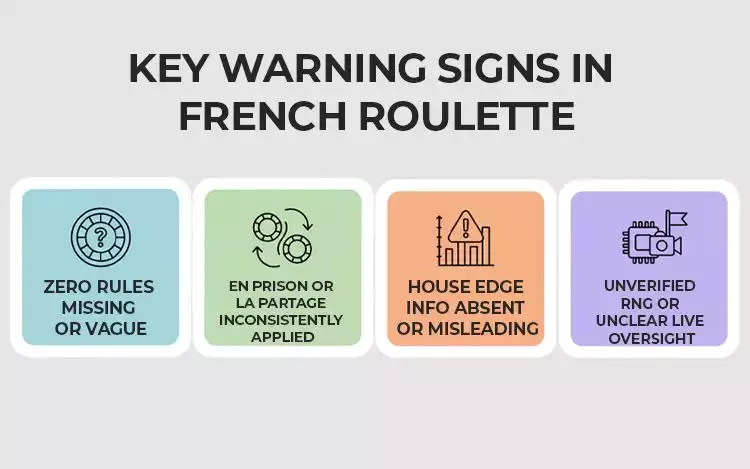
1. Zero Rules Are Missing or Vaguely Explained
A defining feature of French Roulette is how even-money bets are treated when zero lands. Legitimate tables clearly state whether En Prison or La Partage applies.
If a table:
- Mentions French Roulette but does not explain zero handling
- Applies standard European rules without disclosure
- Changes zero outcomes between sessions
These are strong warning signs. Rule clarity is mandatory on regulated table games, and ambiguity should not be ignored.
2. En Prison or La Partage Is Inconsistently Applied
On properly configured French Roulette tables:
- En Prison holds the bet for one spin
- La Partage returns half the stake immediately
- Both rules apply only to even-money bets
If you notice inconsistent outcomes — such as partial losses on zero without explanation — this suggests either a technical issue or a non-compliant implementation. On regulated live casino tables, these rules are monitored and logged for audit.
3. House Edge Information Is Absent or Misleading
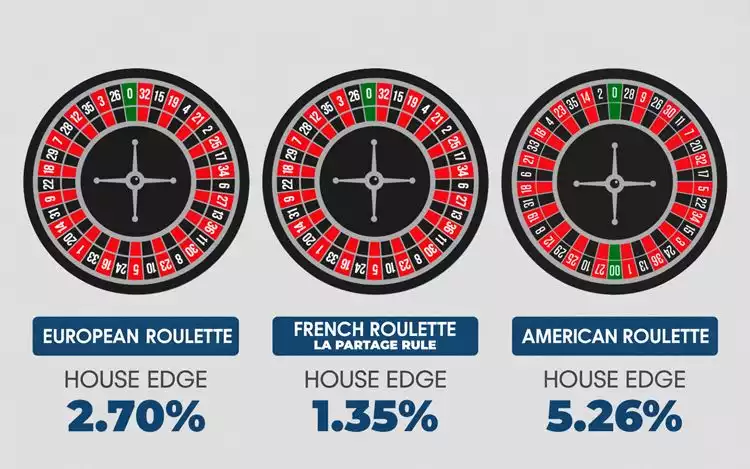
French Roulette’s appeal lies in its lower effective house edge on even-money bets. When En Prison or La Partage is active, this edge is approximately 1.35%, not 2.7%.
If a casino:
- Does not disclose house edge information
- Advertises “French Roulette” without acknowledging rule impact
- Claims improved odds without explaining mechanics
This lack of transparency may indicate poor compliance. You can review how zero rules affect expected outcomes in this guide to roulette house edge.
4. Unverified RNG or Unclear Live Studio Oversight
Digital French Roulette tables rely on certified RNG software, while live tables use physical wheels overseen by studio staff. In both cases, certification matters.
Red flags include:
- No mention of testing agencies (eCOGRA, iTech Labs, GLI)
- No information about the live dealer studio
- Limited camera angles or missing spin history
Reputable live roulette providers archive footage and spin data specifically to prevent disputes.
Why French Roulette Can Feel “Rigged” to Some Players
French Roulette’s player-friendly rules can paradoxically cause confusion. When zero lands and a bet is not immediately lost, players may expect compensation every time — overlooking the fact that En Prison only delays resolution.
Additionally, longer sessions on low-edge tables can still produce losing streaks. This is normal variance, not manipulation. No betting pattern or roulette strategy can alter outcomes or guarantee recovery.
How Regulation Protects French Roulette Players
UK-licensed casinos must demonstrate:
- Correct rule implementation
- Independent testing of RNG outcomes
- Physical wheel inspections for live tables
- Clear player information and dispute procedures
Whether accessed via desktop or mobile apps, regulated platforms are required to apply identical rules and protections across devices.
These safeguards exist because operators already earn revenue through the house edge — manipulation would carry severe legal and financial consequences.
What to Do If You Suspect an Unfair French Roulette Game
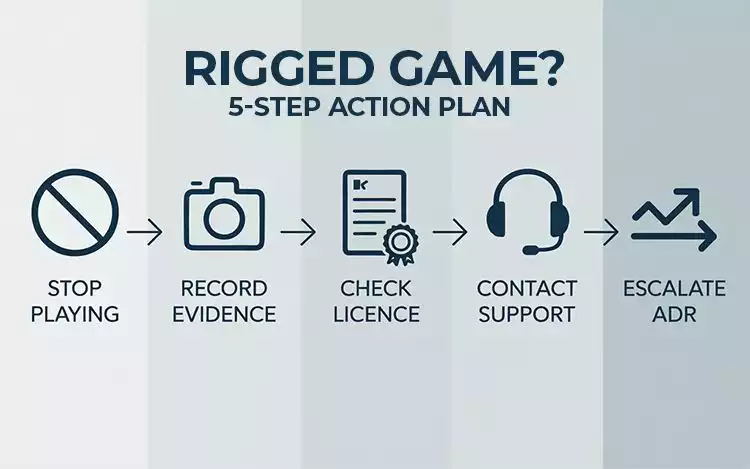
If something appears genuinely wrong:
- Stop playing immediately
- Record evidence (screenshots, timestamps, spin history)
- Check the casino’s licence details
- Contact customer support for clarification
- Escalate through ADR channels if needed
If uncertainty persists, prioritise responsible gaming tools such as limits or session breaks.
Conclusion: Transparency Is the Real Safeguard
French Roulette is not made fair by promises — it is made fair by clear rules, audited systems, and regulatory oversight. When those elements are present, claims of rigging are almost always misunderstandings of probability or rule mechanics.
Key takeaways:
- French Roulette fairness depends on transparent zero rules
- En Prison and La Partage must be clearly disclosed
- Regulated casinos rely on audits, not manipulation
- Random outcomes can still produce losing streaks
For a safer experience, always choose UK-licensed platforms such as Prime Casino and treat French Roulette as entertainment, not a guaranteed return.