Published: 22 Jan 2026 | Updated: 24 Feb 2026


The legality of online gambling varies significantly depending on where a player is located. While some countries operate fully regulated online gambling markets, others restrict or prohibit certain forms of gambling altogether.
These legal differences affect who can gamble, which operators may offer services, and what protections are in place for players. For individuals accessing a regulated online casino, understanding how national laws and age requirements apply is an important part of informed and lawful participation.
This article explains:
- How online gambling laws differ between countries
- Legal gambling age requirements and how they are enforced
- Regions where online gambling is regulated or restricted
- Why identity and age verification are legally required
- Why players should check local laws before registering
|
Disclaimer This article is provided for educational purposes only. Online casino games operate using random number generators, and outcomes are determined by chance. No strategy or approach can influence results. |
Online Gambling Legality and Legal Age by Country
The table below provides a high-level overview of selected countries where online gambling is either regulated or legally permitted under national frameworks. It is intended for educational reference only and reflects commonly cited regulatory positions based on public regulatory guidance, international comparisons of gambling age laws, and global market analysis of regulated online gambling jurisdictions.
Important Note: Gambling laws and age limits are subject to change and may differ by game type or region within a country. Players are responsible for confirming the current legal position in their place of residence. Market-level inferences are informed by global industry reporting and regulatory summaries, including aggregated data analyses published by Statista.
|
Country / Region |
Online Gambling Legal Status |
Legal Gambling Age |
|
United Kingdom |
Regulated |
18 |
|
Ireland |
Regulated (transitional) |
18 |
|
Malta |
Regulated |
18 |
|
Spain |
Regulated |
18 |
|
Italy |
Regulated |
18 |
|
France |
Partially Regulated |
18 |
|
Germany |
Regulated (federal system) |
18 |
|
Sweden |
Regulated |
18 |
|
Denmark |
Regulated |
18 |
|
Canada |
Provincially regulated |
18 or 19 |
|
Australia |
Legal with restrictions |
18 |
|
New Zealand |
Regulated |
18 |
|
United States |
State-dependent |
18 or 21 |
|
Japan |
Restricted |
20 |
|
India |
Grey-area (state-based) |
18 |
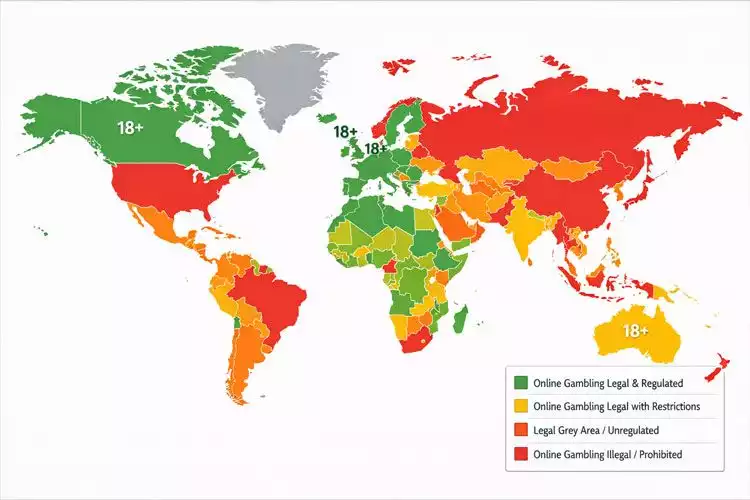 Countries Where Online Gambling Is Regulated
In countries with regulated online gambling markets, operators must hold a licence issued by a national authority. In the UK, this role is fulfilled by the Gambling Commission, which sets binding Licence Conditions and Codes of Practice.
Regulated environments typically require operators to:
- Verify a player’s identity and age before allowing gambling
- Monitor accounts for signs of risk or unusual activity
- Provide clear information about terms, rules, and player protections
These rules apply across all products, including table games, live casino offerings, and online slots and even special promotions designed to attract new players. Regulation does not change the chance-based nature of gambling, but it establishes standards for how services are provided.
How Online Gambling Laws Differ Worldwide
There is no single global framework governing online gambling. Instead, each country sets its own legal position through national legislation and regulatory bodies. Some jurisdictions license and regulate online casinos, allowing them to offer services legally within that market. Others permit land-based gambling but restrict or ban online formats, while some prohibit most forms of gambling entirely.
In regulated markets, licensed operators must meet specific standards related to consumer protection, fairness, and anti-money laundering controls. In unregulated or restricted regions, players may have limited legal protections if disputes arise. These differences mean that legality is determined not by the internet itself, but by the laws of the country where the player is physically located.
Restricted and Grey-Area Regions
Some countries take a restrictive or partial approach to online gambling. In these regions, certain forms of gambling may be legal while others are limited, or the law may focus on regulating operators rather than individual players. This can create “grey areas,” where the legal status of online gambling is unclear to consumers.
In such cases, players may still be subject to local laws even if an operator is licensed elsewhere. A lack of local regulation can also mean fewer consumer protections, making it harder to resolve disputes or access independent complaints processes.
Legal Gambling Age Explained
Legal gambling age is one of the most consistent elements of gambling law, though the exact age varies by country and by type of gambling. In many jurisdictions, the minimum age for online gambling is 18, while others set higher thresholds for certain activities.
International comparisons of gambling age laws show that age limits are designed to reduce harm and prevent underage access. In the UK, gambling laws require strict age controls, and licensed operators must prevent anyone under the legal age from accessing gambling services. These requirements apply regardless of whether games are accessed via desktop or mobile platforms.
Why Identity and Age Verification Are Required
Identity and age verification are legal requirements in regulated gambling markets. UK Gambling Commission rules require operators to confirm a player’s identity and age before allowing gambling or withdrawals. These checks are part of broader “know your customer” obligations designed to prevent underage gambling, fraud, and money laundering.
Verification may involve submitting identification documents or confirming personal details against official records. Enhanced checks can also be required where higher levels of risk are identified. While these processes are administrative, they are a core component of legal compliance and consumer protection.
For guidance on complying with casino terms once you register, review our overview of how to avoid breaching casino T&Cs.
Why Players Must Check Local Laws
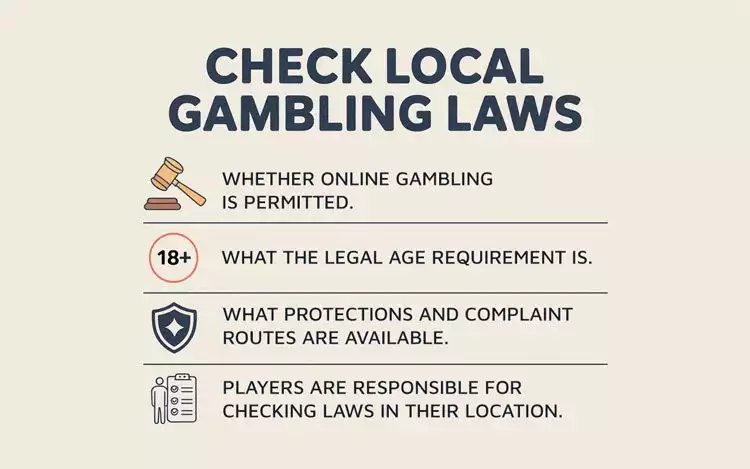
Because gambling laws are location-based, players are responsible for ensuring that online gambling is legal where they live. Operators may restrict access from certain countries to comply with local regulations, but responsibility does not rest solely with the platform.
Checking local laws helps players understand:
- Whether online gambling is permitted
- What the legal age requirement is
- What protections and complaint routes are available
Awareness of these factors supports informed participation and aligns with responsible play principles promoted by regulators.
Final Notes
The legality of online gambling depends on national laws, age limits, and regulatory frameworks. While some countries operate fully regulated markets with strong consumer protections, others restrict or prohibit online gambling altogether. Legal gambling age and identity verification are central requirements in regulated jurisdictions, including the UK, and apply across all online gambling formats.
Key Takeaways
- Online gambling laws vary by country and region
- Legal gambling age is set nationally and strictly enforced in regulated markets
- Regulated countries require licensed operators and player verification
- Grey-area regions may offer limited consumer protection
- Players should check local laws before registering or playing
Understanding how gambling laws apply in different countries helps players navigate regulated platforms responsibly, including UK-licensed operators such as Prime Casino.