Published: 21 Nov 2025 | Updated: 27 Jan 2026


How do live casinos sustain real-time participation across continents, and why do players from different time zones continue to converge at the same digital tables?
This article explores the global connectivity that underpins modern live dealer ecosystems, examining the patterns, technologies, and cultural rhythms that support international engagement.
This article covers:
- How global live casino networks distribute players across regions
- Why time-zone cycles shape access windows and participation peaks
- How studios balance cross-regional demand to maintain table availability
- How casino game and slots enthusiasts interact with diverse international audiences
- The sociotechnical infrastructure that enables real-time connectivity
|
Disclaimer This article is for educational and informational purposes only. It does not promote gambling or encourage extended play. All outcomes in live casino games remain random and are not influenced by player volume, regional activity, or time of day. Support and guidance are available from BeGambleAware.org. 18+ only. |
Understanding Global Live Casino Networks and Cross-Regional Player Flows
Live casino ecosystems operate across interconnected network infrastructures, streaming from purpose-built studios to players engaging through regulated platforms such as a UK-licensed online casino environment. These networks coordinate traffic across Europe, Asia-Pacific, and the Americas, distributing players based on regional leisure hours and the accessibility of services in each jurisdiction.
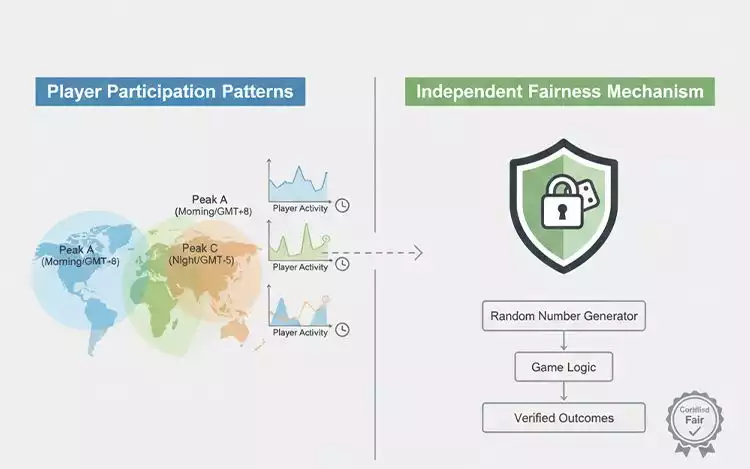
In Europe, evening leisure windows typically align with peak participation, creating higher visibility within game lobbies. Asia-Pacific regions show earlier activity due to significant time-zone offsets, while North and South American players often appear during UK late-night or early-morning periods. The result is a rolling 24-hour cycle of player entry and exit that keeps lobbies fluid without influencing gameplay results.
As players arrive from different regions, the system maintains availability by dynamically scaling table capacity. This is common in platforms offering both general tables and specially formatted environments accessible through a live casino interface, enabling a balanced distribution even during high-demand windows.
Why Regional Time Patterns Shape Participation, Not Gameplay Outcomes
Time zones create predictable engagement rhythms, but they do not change the outcomes of games. UK Gambling Commission rules require that results—whether generated by physical equipment or randomised digital systems—remain independent of table population or player origin.
Regional participation patterns are shaped by:
- Leisure habits and cultural norms
- Local working hours and shift arrangements
- Peak evening recreation periods
- Access constraints linked to local regulations
These factors simply determine when players are present. They do not confer advantages or alter probabilities. Whether a table is populated by UK, European, or international participants, the underlying mechanics operate independently from these external factors.
Players should therefore interpret time-zone differences only as indicators of lobby activity, not as signals of any strategic opportunity.
How Studios Balance Global Demand and Maintain Seamless Connectivity
Studios purpose-built for global distribution use scheduling, multilingual staffing, and automated operational systems to meet international demand. These mechanisms ensure continuity across all time zones.
Multi-Language Tables and International Accessibility
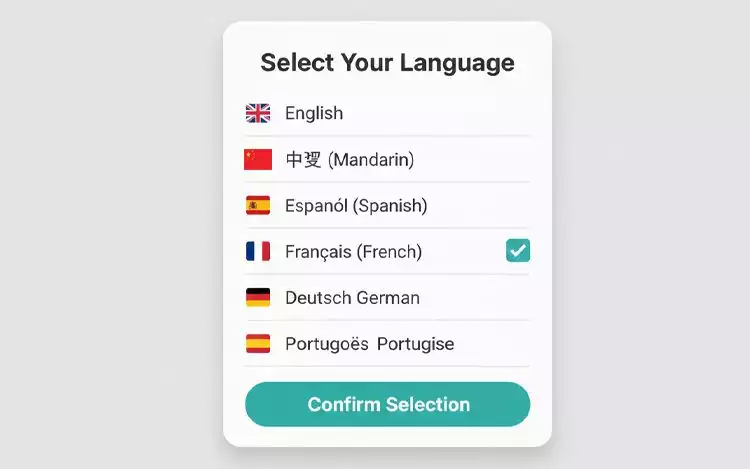
To support a global audience, studios deploy language-specific tables—English, Mandarin, Spanish, and more—alongside universal tables hosted in English. This configuration assists inclusivity and supports engagement across jurisdictions with differing linguistic needs.
For UK players, this diversity is visible when entering a live dealer lobby, where global etiquette norms help stabilise interactions. Facilitated by trained dealers, these norms support consistent communication patterns regardless of player origin.
Dynamic Lobby Adjustments
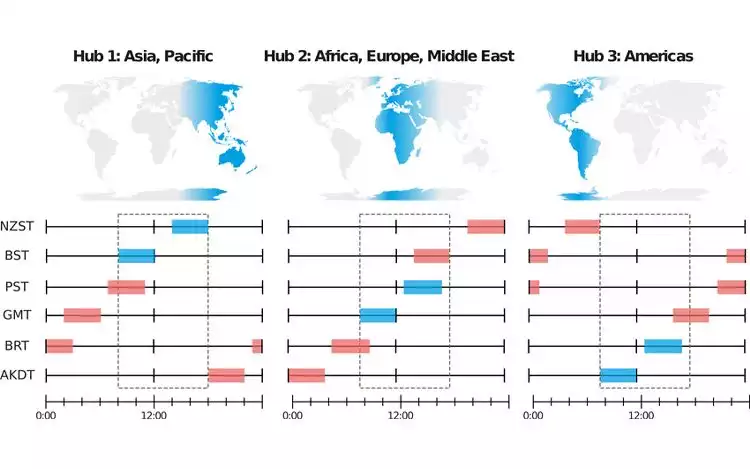
Live casinos scale in real time to match traffic. When activity rises due to overlapping time zones—such as the UK evening aligning with early-morning Asia-Pacific play—operators can:
- Add additional tables
- Extend dealer rotations
- Balance table occupancy to preserve service quality
This dynamic allocation ensures continuity and convenience without creating any performance differences between tables.
Time-Zone Overlap Windows and Player Behavioural Variation
Cross-continent overlap periods create a unique behavioural mix. For UK participants entering during early evenings, it is common to encounter European players reaching similar leisure windows. Later at night, tables draw increased traffic from North and South America. During early UK mornings, Asia-Pacific players are more prevalent.
These overlap windows do not influence outcomes but they do shape the social environment. The volume and diversity of participants may affect:
- Chat interaction patterns
- Table turnover speed due to variable wager pacing
- Lobby transitions as regions move between peak and off-peak periods
Because the system scales automatically, UK players entering through a site’s mobile app interface or desktop platform encounter consistent performance, regardless of global distribution.
Moreover, responsible session planning remains essential. Players are encouraged to maintain manageable session lengths and consult guidance for how to responsibly play if needed.
How International Engagement Enhances Appeal Without Influencing Results
The global appeal of live casinos does not originate from changes to game outcomes; it arises from the social and experiential dimensions of international participation. Platforms offering live dealer environments enable players to observe varied playing styles, communicate across borders, and participate in a broadcast-grade studio environment.
International distribution also reinforces the sense of a continuous, always-available ecosystem. For instance, during sessions where a player might also explore online slots selections, the live ecosystem remains active due to global participation—even during UK off-peak hours.
Importantly, none of these factors influence the fairness or randomness of the games. All outcomes must comply with UKGC principles, ensuring a uniform experience across regions.
Players may see increased table variety during major cross-regional periods or when operators launch seasonal offers. Any such offers are subject to terms and may be referenced through a site’s promotional and bonus pages but should never be interpreted as a timing-based advantage.
Conclusion: A Connected Live Casino Ecosystem Across Time Zones
Live casinos operate as globally interconnected environments shaped by international participation cycles but governed by strict fairness standards. For casino game players, this creates a dynamic but stable experience in which cross-regional engagement enriches the environment without altering outcomes. Time zones influence when people participate, not the nature or fairness of the games themselves.
Key takeaways:
- Cross-time-zone participation creates social variety but does not affect results
- Studios dynamically scale tables to accommodate global activity
- Time zones influence participation patterns, not advantages or probabilities
- Online casino players engage with a round-the-clock community supported by resilient global infrastructure
For further information, players can explore regulated environments such as Prime Casino.