Published: 21 Nov 2025 | Updated: 27 Jan 2026


How do live casinos coordinate global schedules when players from Europe, Asia, and the Americas all expect reliable, real-time gaming access?
Behind every streamed blackjack shoe or roulette spin lies a tightly managed operational model that balances staffing, technology, and regional demand. Understanding these mechanics helps casino game players interpret lobby activity without implying that any hour offers a performance benefit.
This article examines:
- How global studio hubs manage cross-regional time differences
- Why dealer shifts and table rotations follow local working hours
- The technologies enabling 24/7 live casino availability
- How players can interpret lobby patterns responsibly
|
Disclaimer: This article is educational in nature and does not offer gambling advice or recommendations. All casino games operate under regulated randomness. Always play responsibly and seek guidance if needed from BeGambleAware.org. 18+ only. |
The Global Studio Network and Why Time Zones Matter
Live casino operators rely on distributed production hubs to maintain continuity. A single UK-facing online casino may stream content from facilities in Europe, Asia, and North America, each operating within its own local time zone. These locations form an interconnected network that supports continuous availability while still following regional norms.
Regional Hubs and Scheduling Logic
- Europe (UTC–UTC+2) functions as the primary hub for many UK-facing platforms, offering the broadest daytime and evening coverage.
- Asia (UTC+6 to UTC+8) provides late-night and early-morning overlap for UK players when European studios are transitioning between shifts.
- North America (UTC–5 to UTC–8) offers backup and overnight coverage, especially for game-show formats.
This geographic spread allows operators to maintain continuity through a “follow-the-sun” model, where activity shifts between regions as local studios move through their operational cycles.

Dealer Staffing Models and Table Availability
Dealer-led tables depend on human availability, which naturally follows local labour regulations, shift systems, and multilingual staffing patterns. These variables influence visible lobby activity without affecting randomness or game fairness.
Multilingual and Regional Staffing
Operators staff tables based on expected peak demand within each region. For UK-facing lobbies, this means:
- English-speaking dealers predominately scheduled during European daytime and evening hours.
- Additional language options—such as German, Spanish, or Japanese—often aligning with the corresponding region’s local hours.
These patterns explain why UK players may see higher table counts at certain times without implying any advantage to participation.
Rotation, Downtime, and Maintenance
Table maintenance, equipment checks, and staff breaks are staggered across multiple studios. Operators coordinate these windows so that when a European studio temporarily reduces table density, an Asian or American studio can offset the gap. This rotational redundancy ensures the live casino lobby retains core game types throughout the day.
Technologies Enabling 24/7 Live Casino Access
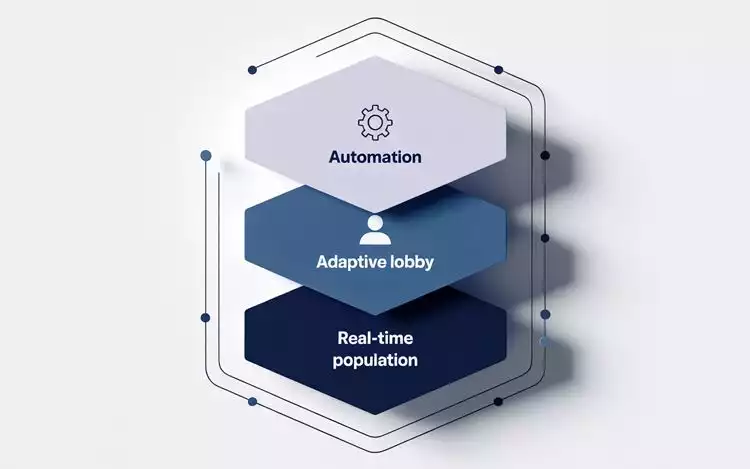
Technology plays a structural role in mitigating time zone challenges. Automated solutions, adaptive lobbies, and real-time population management allow operators to serve a global audience without relying solely on dealer availability.
Automated Tables and Always-On Formats
Auto-roulette, digital dealing systems, and non-stop blackjack tables operate continuously because they require either minimal human intervention or function through automated hardware. These alternative formats anchor 24/7 availability and help smooth over lower staffing periods.
Adaptive Lobby Systems
Dynamic lobbies use real-time data to adjust table visibility based on:
- Open seats
- Regional demand
- Dealer availability
- Language preferences
This ensures that UK players see relevant options rather than inactive or offline tables. These systems support accessibility but do not affect game outcomes, which remain random and strictly controlled.
Dynamic Population Indicators
Many lobbies display table population (e.g., “2/7 seats taken”). These indicators represent demand and availability, not opportunity. A quieter table does not change probabilities, house rules, or return-to-player values. They simply reflect global usage patterns.
Why Certain Tables Are More Active at Specific Hours
Lobby activity reflects operational cycles rather than performance cycles. The underlying game mechanics remain constant regardless of when a player joins.
Understanding Peak and Low Activity
Activity typically aligns with:
- European peak hours: late afternoon to late evening
- Asian peak hours: UK early morning
- American peak hours: UK overnight
These patterns can explain shifts in available formats or languages but should not be interpreted as strategic windows. The outcome of any live casino game—dealer-led or automated—is governed by regulated processes, not by player density or time-of-day.
Localisation and Global Access
Operators provide multilingual tables, region-specific etiquette norms, and localised interface elements such as chip sets, currency formats, and display settings. These features support international participation and improve usability, but they do not alter fairness or game structure.

Player-Facing Implications and Responsible Interpretation
Understanding operational scheduling empowers players to manage expectations and maintain balance. It does not identify “better” times to engage.
Interpreting Patterns Safely
- High activity often reflects regional overlap periods.
- Lower activity does not impact dealer performance or randomness.
- Automated tables remain stable regardless of global player volume.
Players should approach lobby indicators as informational prompts, not as signals of strategic value.
Tools Supporting Balanced Scheduling
Features such as personalised alerts, short sessions via mobile, and on-platform limits can help maintain controlled engagement. Responsible time management remains essential, supported by formal tools for those who want to play safely.
Promotions and Timing
Access to certain bonus windows may follow operator schedules rather than studio schedules. These time frames are administrative and do not affect underlying probabilities.
Conclusion
Live casinos address global time zone challenges through an intricate combination of regional studio distribution, multilingual staffing, automated technology, and adaptive lobby management. For UK players, these systems ensure continuous access to core table types without creating differences in outcome or fairness. Understanding why certain tables appear at particular hours helps contextualise the lobby, but it should never be interpreted as a source of strategic advantage. Balanced scheduling, responsible decision-making, and awareness of operational cycles remain the most reliable ways to navigate a global live casino environment.
Key takeaways:
- Global studios follow local working hours, creating natural variations in table availability.
- Automated tables and adaptive lobby systems underpin 24/7 access.
- Lobby patterns reflect operational cycles, not performance or advantage.
- Responsible use of tools and balanced scheduling support sustainable engagement on UK licensed casinos
For further information on UK-licensed live casino environments and platform features, you can explore Prime Casino.