Published: 19 Nov 2025 | Updated: 27 Jan 2026


How can you determine whether a live casino environment is genuinely trustworthy, and what does a licence actually guarantee?
Licensing does not eliminate all risks, nor does it influence your chances of winning. However, it establishes a mandatory framework of accountability, fairness testing, and consumer protection that unlicensed platforms cannot match.
These questions sit at the centre of responsible digital gambling, particularly as casino players increasingly engage with regulated online casino platforms and real-time dealer environments
Before examining individual regulatory requirements, it is useful to understand the scope of protections licensing is designed to support.
This guide explains:
- What a live casino licence confirms in regulatory terms
- Core functions of licensing and what they do not cover
- Oversight by the UK Gambling Commission, including enforcement and mobile regulation
- How licensing governs fairness, dealer studios, and fund protection
- Dispute resolution procedures and player support mechanisms
- Differences between licensed and unlicensed platforms
- Limitations of licensing and player responsibilities
|
Disclaimer: This content is provided for educational purposes only and does not constitute legal, financial, or regulatory advice. A UKGC licence confirms regulatory compliance and consumer protections but does not guarantee game outcomes or eliminate financial risk. 18+ | Play Responsibly | For support, visit BeGambleAware.org. |
Understanding What a Live Casino Licence Represents in Regulatory Terms
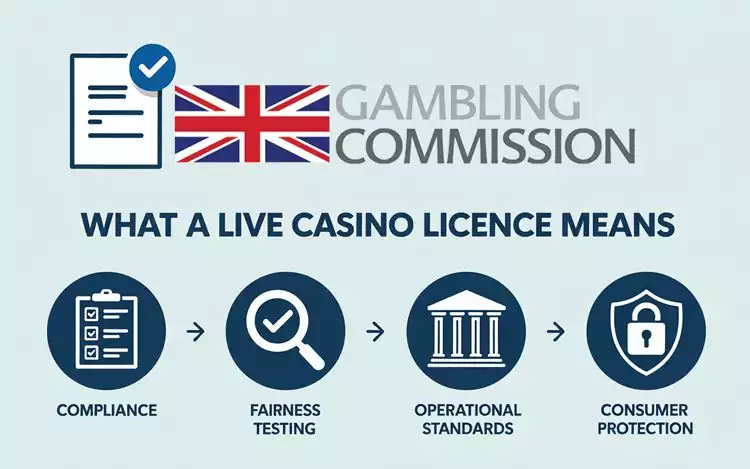
A live casino licence is not a commercial endorsement. It is a legal authorisation that confirms an operator has met the operational, technical, and behavioural standards required to offer licensed live dealer games in the UK. These standards exist to control risks associated with digital gambling, including fairness, funding practices, and player privacy.
Core Regulatory Functions of Licensing
Licensing establishes a formal relationship between the operator and the state. The operator must demonstrate:
- Transparent ownership structures
- Adequate financial reserves
- Approved internal controls
- Documented procedures for dispute handling
- Demonstrable commitment to player protection
If these requirements are not met, the licence can be suspended or revoked.
Why Licensing Does Not Affect Randomness or Outcomes
A licence confirms adherence to technical and procedural controls; it does not amend the inherent characteristics of casino games. All live games, whether table-based or digital hybrids such as slots, must maintain randomness and a house edge. Licensing ensures these characteristics remain intact through auditing and monitoring—it does not change them.
The Role of the UK Gambling Commission in Live Casino Oversight
The UK Gambling Commission (UKGC) is the regulatory authority responsible for approving, monitoring, and enforcing licences for live casino operations targeting UK players. Its role centres on player safety, market integrity, and consumer rights.
Monitoring Operator Behaviour
The UKGC continuously assesses whether operators are meeting their obligations. Monitoring can include:
- Reviewing internal controls
- Assessing reporting accuracy
- Evaluating the treatment of customers experiencing gambling harm
- Investigating complaints or unusual operating practices
These activities ensure operators remain accountable throughout the lifetime of their licence.
Enforcing Compliance Through Penalties
When issues arise, the UKGC can issue fines, impose licence conditions, or suspend operations. This enforcement structure ensures that non-compliance carries material consequences. Enforcement activity is publicly documented to support transparency across the sector.
Regulating Remote and Mobile Play
Where players interact with live casinos via mobile devices, the operator remains bound by the same licensing requirements. This includes game fairness rules, identity verification, fund-handling standards, and responsible gambling controls. Licensing ensures parity across the devices and channels used to access gambling content.
How Licensing Controls Game Fairness, Dealer Studios, and Player Fund Protection
Licensing introduces structured oversight across several operational layers. These controls reduce systemic risk, formalise operator responsibilities, and support clearer decision-making for players.
Game Fairness and Independent Testing
Licensed operators must submit their live dealer systems to accredited testing bodies. Requirements include:
- Verification of randomisation procedures
- Monitoring of live dealer workflows
- Audit trails that document every game action
- Periodic re-testing to ensure no drift from approved configurations
Fairness controls confirm technical integrity; they do not guarantee individual outcomes.
Dealer Studio Standards
Live dealer studios must meet defined criteria relating to:
- Secure physical environments
- Camera and recording infrastructure
- Controlled access to gaming equipment
- Trained staff adhering to documented procedures
These standards help prevent unauthorised interference and support reliable dispute resolution.
Player Fund Protection and Segregation
Licensing dictates how player funds must be stored and categorised. Operators must declare their level of financial protection, enabling players to understand how deposits are handled. Although protection levels differ, the requirement for clarity is non-negotiable.
For additional management support, players may use player protection tools to control spending or session length. These tools supplement licensing obligations but cannot replace them.
Complaint and Dispute Resolution
Licensed operators must provide:
- Accessible complaint pathways
- Timely responses to escalated issues
- Access to an Alternative Dispute Resolution (ADR) provider
ADR bodies operate independently, ensuring matters are evaluated impartially. This framework is absent on unlicensed or offshore platforms.

Comparing Licensed and Unlicensed Live Casino Environments
The distinction between licensed and unlicensed environments is central to player safety. Licensing provides a verifiable regulatory anchor; unlicensed platforms operate without enforceable obligations.
Characteristics of Licensed Platforms
Licensed environments typically demonstrate:
- Transparent ownership and operational details
- Clear display of licence number and conditions
- Published terms and conditions, including bonus terms
- Documented policies on safeguarding vulnerable individuals
- Defined procedures for handling disputes
These features support informed participation and accountability.
Risks Associated With Unlicensed Platforms
Unlicensed platforms may lack:
- Verified fairness controls
- Reliable fund segregation
- Independent dispute-resolution mechanisms
- Clear operational documentation
- Enforceable consumer protections
Without regulatory oversight, there is no external authority to intervene if issues arise. Licensing therefore serves both as an assurance framework and a mechanism for recourse.
What Licensing Can and Cannot Protect You From
Licensing provides protection against:
- Manipulated gaming systems
- Poor disclosure of operational practices
- Negligent fund-handling
- Absent complaint channels
Licensing cannot protect players from:
- Financial loss inherent to gambling
- Misinterpreting terms or game mechanics
- Excessive play without using available safeguards
- Risks incurred when engaging outside licensed environments
The responsibility for understanding boundaries remains with the player.
Conclusion
Live casino licensing functions as a structured, enforceable framework that protects players through transparency, fairness controls, fund-handling requirements, and accountable operating practices. It does not alter game outcomes, eliminate risk, or guarantee personal gain. Instead, it establishes measurable standards that distinguish regulated environments from unregulated ones. Understanding these standards enables informed decision-making and more controlled engagement with live dealer content.
Key takeaways:
- A licence represents compliance with operational and fairness standards, not outcome guarantees
- The UKGC oversees operator behaviour, audits, and enforcement
- Licensing governs fairness testing, studio controls, fund segregation, and dispute resolution
- Unlicensed platforms lack enforceable consumer protections
- Responsible use of regulatory information supports safer participation
For more information on UK-licensed environments, visit Prime Casino.
|
Reminder Gambling is for entertainment only. Use available limits and seek support if gambling stops feeling manageable. 18+ only. For support, visit BeGambleAware.org. |