Published: 15 Dec 2025 | Updated: 28 Jan 2026


Most claims that live roulette is “rigged” are rooted in misunderstanding randomness. However, not all live roulette environments are equal, and there are legitimate warning signs players should be aware of — particularly when playing on poorly regulated or unlicensed platforms.
This guide explains what genuinely suspicious behaviour looks like, how to separate technical issues from real risk, and when concerns are justified versus when they are simply variance at work.
In this article, you’ll learn:
- What actually qualifies as suspicious behaviour in live roulette
- Which patterns are normal — and which are not
- Dealer and platform red flags to watch for
- How to distinguish glitches from manipulation claims
- What steps to take if you suspect unfair play
This article does not suggest that licensed live roulette games are rigged. Instead, it helps players identify risk indicators associated with unregulated or poorly operated environments when playing live roulette at an online casino.
|
Disclaimer This article is for educational and informational purposes only. It does not promote gambling or suggest outcomes can be influenced. All roulette games are governed by randomness and house rules. Players should only use UK-licensed operators and play responsibly. |
First: What Is Not a Sign of Rigging
Before identifying genuine warning signs, it’s important to rule out common false alarms.
The following are not evidence of rigging:
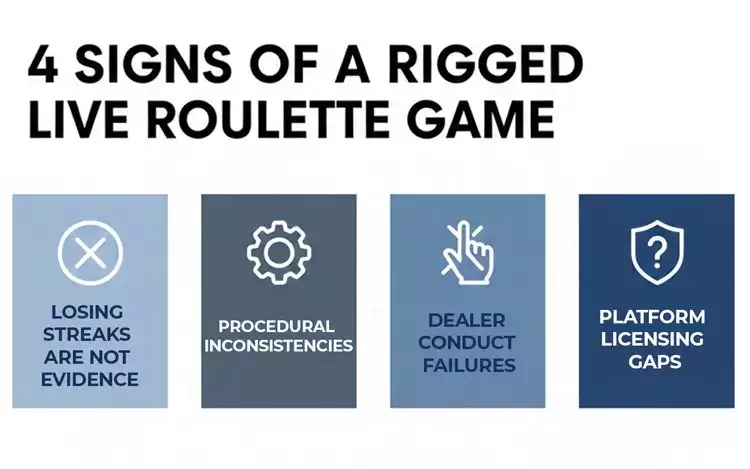
- Long losing streaks
- Repeated colours or numbers
- Outcomes that contradict betting systems
- Wins following table minimum bets
- Losses after increasing stakes
Roulette outcomes are random. Variance naturally produces clusters and streaks, even over short sessions. These experiences feel suspicious but are mathematically normal and are often misinterpreted as evidence of flawed systems or ineffective roulette strategy discussions that assume outcomes can be anticipated.
Suspicion should be based on process failures, not results.
Unusual Betting Patterns to Watch — and What They Mean
Players often believe that certain patterns indicate manipulation, such as:
- Frequent zero hits
- Alternating colours
- Repeated low or high numbers
On their own, these patterns are meaningless. Roulette wheels do not “remember” previous spins.
However, concern may be warranted if:
- Outcomes are repeatedly obscured or interrupted
- Results are not clearly visible on camera
- Winning numbers change after bets are closed
These are procedural issues, not statistical ones — and they deserve scrutiny.
Dealer Behaviour Red Flags
In legitimate live roulette games, dealers follow strict, repetitive procedures.
Potential red flags include:
- Inconsistent spin techniques
- Frequent re-spins without clear justification
- Obstructed camera views during spins
- Dealers interacting with equipment off-camera
- Repeated manual interventions without explanation
One isolated incident does not imply misconduct. Patterns of procedural deviation are more concerning than individual mistakes.
Licensed studios monitor dealer behaviour continuously, and deviations are logged and reviewed.
Technical Glitches vs Genuine Issues
Technical problems are common in online environments and are often mistaken for manipulation.
Common Non-Suspicious Issues
- Temporary video lag
- Delayed result display
- Chat or interface freezing
- Disconnections during peak hours
These issues affect presentation, not outcomes.
When Technical Issues Become Concerning
Concern may be justified if:
- Bets are accepted after the ball is released
- Results differ between players
- Session records are unavailable
- Game history cannot be accessed
- Support refuses to explain discrepancies
Transparency is key. Legitimate operators document and explain technical incidents.
Licensing Gaps and Platform-Level Warning Signs
The largest risk factor for unfair live roulette is not the game — it is the platform hosting it.
Warning signs include:
- No visible gambling licence
- Vague or unverifiable regulatory claims
- Missing terms and conditions
- No responsible gambling tools
- Poor or evasive customer support
Licensed operators are accountable to regulators such as the UK Gambling Commission. Platforms operating outside these frameworks offer no meaningful recourse if issues arise.
This is why understanding how to tell if live roulette is fair is essential before real-money play.
How to Report Suspected Rigging or Unfair Play
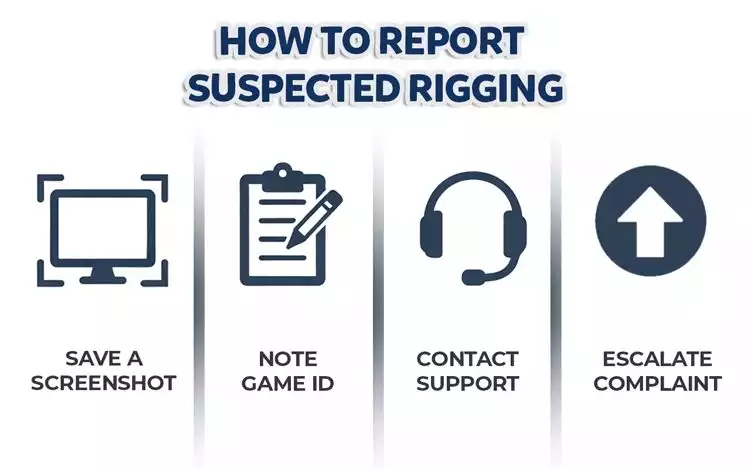
If you suspect genuine unfairness, the correct response is documentation, not accusation.
Recommended steps:
- Save screenshots or recordings where permitted
- Note game ID, date, and time
- Contact customer support for clarification
- Request escalation if explanations are insufficient
- Use formal complaints channels where available
Licensed operators are required to investigate complaints and provide dispute resolution options.
Avoid continuing play until concerns are resolved.
Why Most “Rigged” Claims Are Myths
The majority of rigging accusations arise from:
- Emotional decision-making after losses
- Misunderstanding probability
- Overconfidence in betting systems
- Confirmation bias
Licensed casinos already earn revenue through the house edge. Manipulating live roulette outcomes would be easily detectable, commercially irrational, and regulatorily catastrophic.
This is why true rigging cases are exceptionally rare in regulated environments.
Responsible Play and Risk Awareness
Understanding warning signs helps players avoid unsafe platforms — but it does not eliminate risk.
Live roulette remains a game of chance. Responsible play means:
- Choosing licensed operators only
- Avoiding emotional chasing behaviour
- Using time and spend controls
- Treating roulette as entertainment
Any promotions encountered should be reviewed carefully for terms and wagering conditions, as they do not alter game fairness or outcomes. Awareness protects players far more effectively than suspicion.
Conclusion: Signs That a Live Roulette Game May Be Rigged
Genuine warning signs in live roulette are procedural and regulatory, not statistical.
Key Takeaways:
- Losing streaks and patterns are not evidence of rigging
- Procedural inconsistencies matter more than outcomes
- Dealer conduct is monitored in licensed studios
- Platform licensing is the strongest safety indicator
- Most rigging claims stem from variance and bias
When played at regulated platforms, live roulette is designed to be transparent and auditable. Players who understand what to watch for can confidently avoid risky environments and focus on fair play. For licensed access to live dealer games, explore Prime Casino.
18+ | Play Responsibly