Published: 3 Nov 2025 | Updated: 4 Dec 2025


Ever wondered why European and French Roulette are so often described as “fairer” games?
The answer lies in one small but critical design choice: the single zero. This detail significantly shapes the house edge, influencing how long your bankroll lasts and how consistently you experience returns across sessions of online roulette.
In this article, we’ll explain what the house edge is, why the single zero matters, and how this structure benefits players under UK-regulated live roulette tables. We’ll also connect these mechanics to broader insights you can find across the online casino ecosystem, particularly in classic table games.
Here’s what you’ll learn:
- What the house edge really represents
- How a single zero affects expected outcomes
- The key rule variations between European, French, and American roulette
- Why understanding these odds promotes more informed, responsible play
|
Disclaimer: This content is for educational and informational purposes only. It does not promote gambling or suggest outcomes. Results in all casino games, including roulette, are random. Players should only use UK-licensed platforms and play responsibly. 18+. For safer play advice, visit BeGambleAware.org. |
Comparison Overview: Single vs Double Zero Roulette
While the difference seems minor — just one extra pocket — this structure supports more gradual variance in outcomes under regulated gameplay. The change has measurable effects on long-term outcomes and is central to why European and French tables remain the preferred versions among informed players of both rng-based or live casino sessions.
|
Variant |
Zeros |
Total Slots |
House Edge |
Notable Rule |
Outcome for Players |
|
European Roulette |
1 |
37 |
2.70% |
Standard |
Statistically fairer distribution |
|
French Roulette |
1 |
37 |
1.35% (with La Partage) |
La Partage / En Prison |
Reduced long-term loss rate |
|
American Roulette |
2 |
38 |
5.26% |
Double Zero |
Higher variance and casino advantage |

What the House Edge Represents in Roulette
The house edge is a mathematical reflection of how much a casino expects to retain from all wagers over time. In simple terms, it’s the difference between true odds and payout odds. For instance, an even-money bet (like red or black) pays 1:1, yet because of the zero, the true probability of winning in European Roulette is 18/37 — not 18/36 — giving the house a consistent edge of 2.70%.
This percentage may seem small, but over hundreds of spins, it reflects how casinos maintain a predictable long-term margin — even though each individual spin remains completely random.
The Mathematical Effect of the Single Zero
When comparing single- and double-zero wheels, the core difference lies in total probability spaces:
- European Wheel: 1 zero out of 37 slots (1/37 ≈ 2.7%)
- American Wheel: 2 zeros out of 38 slots (2/38 ≈ 5.26%)
That means each additional zero effectively increases the casino’s built-in advantage by nearly double. Over time, this amplifies expected loss rates for players, not through manipulation but through the design of statistical balance.
For example, if £10 is wagered on every spin for 1,000 spins:
- European format → expected long-term loss ≈ £270
- American format → expected long-term loss ≈ £526
These percentages are theoretical expectations under certified RNGs or properly audited live wheels; they do not guarantee short-term outcomes. Some operators offer responsibly managed promotions that allow players to explore roulette formats or bonus features with set wagering limits — always review terms before participating
Comparing European and French Roulette Rules
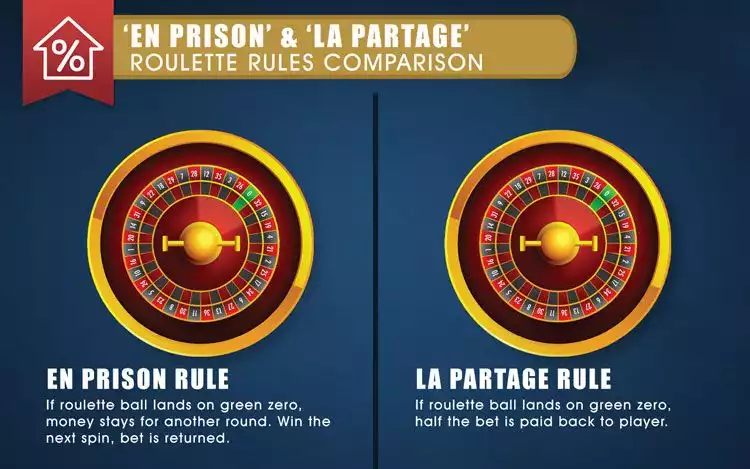
Though both versions use a single zero, French Roulette introduces additional fairness mechanisms. The La Partage rule refunds half a player’s even-money bet if the ball lands on zero. Its cousin, En Prison, allows that bet to stay “in play” for the next spin rather than being lost outright.
These small adjustments reduce the effective house edge to roughly 1.35%, half that of European Roulette. According to data compiled by the UK Gambling Commission’s game fairness standards, such structural rules illustrate how regulated roulette variants prioritise balanced gameplay over volatility.
What This Means for Fairness and Long-Term Play
The takeaway? The single zero isn’t about “beating the odds” — it’s about minimising disadvantage. Players on European and French tables experience slower statistical loss, which supports more gradual variance in outcomes under regulated gameplay..
Most live roulette and online roulette tables in regulated markets follow this format, as it’s considered the international standard for fairness. For deeper insight into probability and expected return, see our related guide, The Impact of the House Edge in European Roulette.
Responsible Play and Understanding Probabilities
Understanding the mathematics behind roulette helps temper expectations. A lower house edge simply means a slower rate of loss — not a method to guarantee outcomes. Responsible play starts with understanding these probabilities and setting personal limits.
Players can explore safer tools and information through responsible gaming resources. For those curious about strategies and misconceptions, visit our myth-busting article, Popular Myths About European Roulette for a data-driven perspective.
European roulette tables are available across UKGC-licensed operators such as Prime Casino, offering certified RNG versions and live-dealer options. Players can also enjoy secure play through the Prime Casino mobile app, which provides access to licensed roulette tables and responsible gambling tools on the go.
📊 Mathematical summary — single-zero vs double-zero roulette
Quick facts
- European (single zero) wheel: 37 pockets (0–36).
- American (double zero) wheel: 38 pockets (0, 00, 1–36).
- French rules (La Partage) return half of even-money bets when the ball lands on 0 — this reduces effective house edge on those bets.
Probability & House Edge (Common Bets)
|
Variant |
Probability of a single number |
House edge (straight/one-number bet) |
|
European (single 0) |
1 / 37 ≈ 2.7027% |
(36/37)·(−1) + (1/37)·35 → ≈ 2.70% |
|
American (0 and 00) |
1 / 38 ≈ 2.6316% |
(37/38)·(−1) + (1/38)·35 → ≈ 5.26% |
|
French (single 0 + La Partage, even bets) |
same single-number house edge as European; even-money bets effectively ≈ 1.35% with La Partage |
Straight bet unchanged; even bets benefit from La Partage |
Why the single zero matters
- Removing the extra 00 reduces the casino’s edge because fewer house pockets are present relative to player numbers.
- For a straight bet the house edge is essentially the extra probability mass the house holds: with 37 pockets this is ~2.70%; with 38 pockets it rises to ~5.26% — roughly double.
- La Partage further lowers the effective edge on even-money bets by returning half the stake when 0 occurs (common in French roulette).
- The single zero reduces the theoretical house advantage, making European/French roulette mathematically preferable to American roulette for players seeking lower long-term expected loss per bet.
These percentages are theoretical expectations under certified RNGs or properly audited live wheels; they do not guarantee short-term outcomes. All results remain random. 18+. For safer play guidance visit BeGambleAware.org.
Conclusion
The single zero in European and French Roulette is more than a design feature — it’s a deliberate adjustment that mathematically lowers the house’s long-term advantage. By understanding how it functions, players can appreciate the structure of fairer roulette formats without falling into prediction myths.
Key takeaways:
- The house edge measures long-term statistical return, not player performance.
- A single zero reduces that edge from 5.26% to around 2.7%.
- French rules like La Partage cut it further to 1.35%.
- Knowledge of these mechanics supports responsible, informed play.
For more analytical breakdowns of roulette variants, explore educational resources and fair play guides at Prime Casino.
|
🎓 Fairness Reminder All roulette results — including single-zero formats — are determined by certified RNG systems under UKGC oversight. Understanding the maths behind the house edge can support informed, responsible play. 18+. Visit BeGambleAware.org for safer play guidance. |