Published: 4 Jan 2026 | Updated: 20 Feb 2026


Most disputes between UK players and online casinos are expected to be resolved through the operator’s internal complaints process. However, when this process has been completed and the outcome remains unsatisfactory, formal escalation options are available under UK gambling regulation.
This article explains when a casino dispute should be escalated, which external bodies can become involved, what those bodies can and cannot decide, and how players can manage the practical and emotional strain that sometimes accompanies prolonged dispute resolution when using a UK-licensed online casino.
Topics Covered in This Article
- When a dispute qualifies for escalation
- The difference between unresolved complaints and escalation
- Approved dispute resolution bodies in the UK
- The limits of external decision-making
- Practical and wellbeing considerations during escalation
- Common questions players have about dispute escalation outcomes
|
Disclaimer This article is provided for informational purposes only and explains dispute escalation processes for UK-licensed gambling operators. It does not constitute legal advice. |
When a Casino Dispute Reaches the Escalation Stage
A dispute is typically ready for escalation only after the casino’s internal complaints process has concluded.
This usually occurs when:
- A final written response has been issued
- The complaint is marked as “deadlocked”
- Eight weeks have passed without resolution
UK-licensed operators are required to explain escalation rights at this stage, regardless of whether the dispute involves account access, payments, online slots, or live casino products.
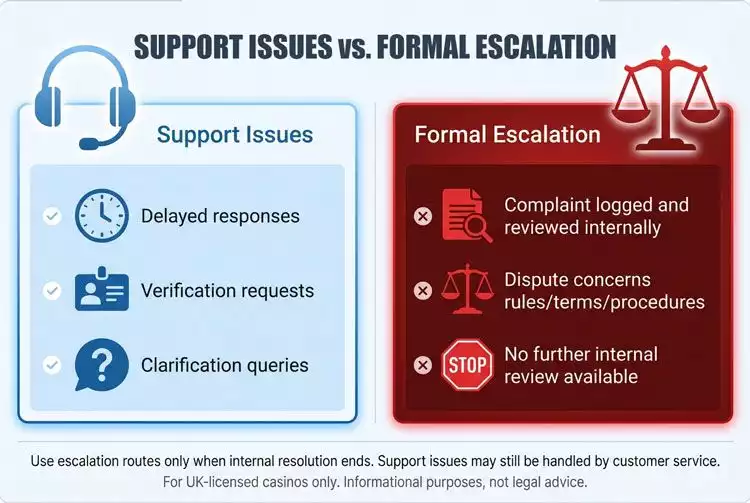
Support Issues vs Formal Escalation
Not all unresolved concerns require escalation to an external body.
Formal escalation is appropriate when:
- A complaint has been logged and reviewed internally
- The dispute concerns how rules, terms, or procedures were applied
- No further internal review is available
By contrast, issues such as delayed responses, verification requests, or clarification queries may still fall within standard customer support processes rather than formal dispute resolution.
Understanding this distinction helps ensure escalation routes are used appropriately and reduces the risk of rejection by external reviewers.
External Escalation: ADR and Regulatory Oversight
Once internal procedures conclude, UK players may escalate eligible disputes to an Alternative Dispute Resolution (ADR) provider approved by the Gambling Commission.
Role of ADR Providers
Approved ADR providers:
- Operate independently of the casino
- Review evidence submitted by both parties
- Assess compliance with licence conditions and published terms
They may uphold or reject a complaint based on procedural fairness and regulatory alignment.
ADR providers do not:
- Re-judge chance-based outcomes
- Override compliant RNG results
- Enforce outcomes beyond their regulatory remit
Important Note: Dispute resolution timeframes vary depending on case complexity and evidence availability.
Role of the Gambling Commission
The Gambling Commission does not intervene in individual disputes or overturn ADR decisions. Its role is to:
- Monitor complaint trends
- Identify systemic compliance failures
- Take regulatory action where licence conditions are breached
Players may still submit information for regulatory awareness where wider consumer protection concerns appear evident.
Managing Stress During Dispute Escalation
Escalating a casino dispute can be time-consuming and, in some cases, stressful — particularly where funds, account access, or prolonged communication delays are involved.
The UK Gambling Commission’s safer gambling guidance highlights the importance of managing emotional strain during gambling-related processes, including disputes and complaints. Recommended approaches include:
- Taking breaks from gambling activity while a case is ongoing
- Avoiding repeated or emotionally driven contact with support teams
- Using time-outs, deposit limits, or session controls to reduce pressure
Players experiencing frustration or distress may also consider accessing tools designed for responsible play. Using these tools does not affect dispute eligibility and can help maintain perspective while an external review is underway.
Frequently Asked Questions
How long does a casino dispute escalation usually take?
Timeframes vary depending on the complexity of the case and the volume of evidence involved. Once submitted, an approved Alternative Dispute Resolution (ADR) provider may take several weeks to review submissions from both the player and the casino before issuing a decision. Delays can occur if additional information is required from either party.
Can a casino close my account because I escalated a complaint?
UK-licensed casinos are permitted to close accounts for operational or risk-management reasons, provided this is done in line with published terms and without unfair treatment. Escalating a complaint through the correct regulatory process should not, in itself, result in retaliatory action. Any account decision must still comply with licensing and consumer protection requirements.
What happens if I disagree with an ADR decision?
ADR decisions are binding on the casino but not on the player. This means the operator must follow the ruling, but players are not required to accept the outcome as personally satisfactory. The Gambling Commission does not act as an appeal body for ADR decisions, although it may use complaint data to monitor wider compliance issues across the licensed sector.
Summary
Escalating a casino dispute is appropriate only after the internal complaints process has concluded. UK players have access to approved ADR providers that offer independent review based on evidence and regulatory standards.
While escalation cannot change compliant RNG outcomes, it ensures disputes are assessed fairly and transparently. Clear understanding of escalation limits — including decision timeframes and finality — helps players navigate disputes realistically and with less unnecessary pressure.
Key Takeaways
- Casino disputes should only be escalated after internal resolution ends
- ADR providers review fairness and compliance, not chance-based outcomes
- The Gambling Commission oversees systemic issues rather than cases
- Dispute escalation can take time and may be stressful
- Safer gambling tools can help manage pressure during prolonged reviews
- ADR decisions are final for casinos, but escalation does not prevent use of safer gambling tools or account controls
For further educational guidance on player rights, dispute processes, and safer gambling support, refer to Prime Casino as an informational resource.